The Histories of Medicinal Practices, Contemporary Tragedies, The Body, and The Natural World: A Review of M. Cynthia Cheung’s COMMON DISASTER
Reviewed By Katie Pelkey
The poet and physician M. Cynthia Cheung draws from her expertise in medicine and language, oscillating between soothing and aching in her debut collection, Common Disaster.
The poems in this collection span an array of lofty topics: the histories of medicinal practices, contemporary tragedies, the body, and the natural world. Yet the collection remains centrally focused on a doctor's struggle to tend to the self amid illness and uncertainty. One of the great pleasures of reading Cheung's book is being privy to a perspective that is so underrepresented in the poetry world and is daringly personal: "Sometimes after work I get sloppy: I'll use/ teabags instead of loose-leaf, eat/ bread straight from the bag. But I never/ forget to open the fridge and check/ each item, pretending this is all I need." (33, "Common Disaster No. 2")
Every poem seems to emulate the tenderness with which a good doctor treats their patient. Often, this tenderness is achieved through Cheung's deft balance of the presentation of factual reality with her concern for finding just the right words. In "Seeing My Patient's CT Scan," she describes a dilemma shared by both poet and doctor: speaking the unspeakable. "Suddenly I have too many/ words, and not enough." (42) These are the speaker's sentiments as she struggles to deliver grave news to a patient and his family. I found myself enamored with this speaker, whose job feels so impossible, and for whom language is a coping mechanism. "Isn't it strange that man in Irish/ is spelled fear? And pronounced like far?" (42) These are the questions which arise at the beginning of the poem, a microcosm of the attention Cheung gives to origin and history that make up the fabric of her book.
As much as she is concerned with history, Cheung's poems also engage with recent global events, lending a voice to histories untold. The poem "We Would Welcome a Full Investigation into This Matter" offers a harrowing look at a 2024 event in which a six-year-old girl and two paramedics were killed in Gaza. Cheung brings the reader in-scene by way of an imagined phone conversation between the girl and emergency services: "…we are coming we won't/ stop until we find you/ rest now you can/ close your eyes let's pretend to make/ the tanks invisible – " (19). Her poems document real horrors with images that we often want to turn away from, but are propelled to keep reading, to keep lingering. The project of the book seems as photojournalistic as it is linguistic. One especially striking and gut-wrenching image concludes her poem about the Bucha massacre in Ukraine, "Imagine those gray feet – / thirty-some years old – sticking out beneath/ the corner of a flowered bedsheet/ spread over a patch of dirt, the father/ folding it back, fist to mouth – " (14) Cheung's images attach themselves, and are difficult to shake off past their presentation on the page.
In many ways, this is a collection which documents as it describes. Cheung's poems resurrect and recount history—both personal and impersonal—by placing the reader into the scene and rendering descriptions which are poignant and unexpected: "I remember my grandmother waiting/ to die. When she opened her mouth/ at the end, the sounds were already gone." (39) I was struck with anguish over the speaker's loss of her grandmother, a figure which recurs throughout the collection. So too was I moved by the description Cheung creates from the case study of the ancient Younger Lady mummy, "…there remain no words/ to describe the unmistakable sound/ of impact, when a body follows its head/ to the ground." (22) Many of the descriptions Cheung includes are based on true events, though, as I see it, these images would not be possible if not for her doctor-mind and poet-heart working in continuous harmony.
Common Disaster is just the beginning for M. Cynthia Cheung. I gladly await future publications by this outstanding new voice.
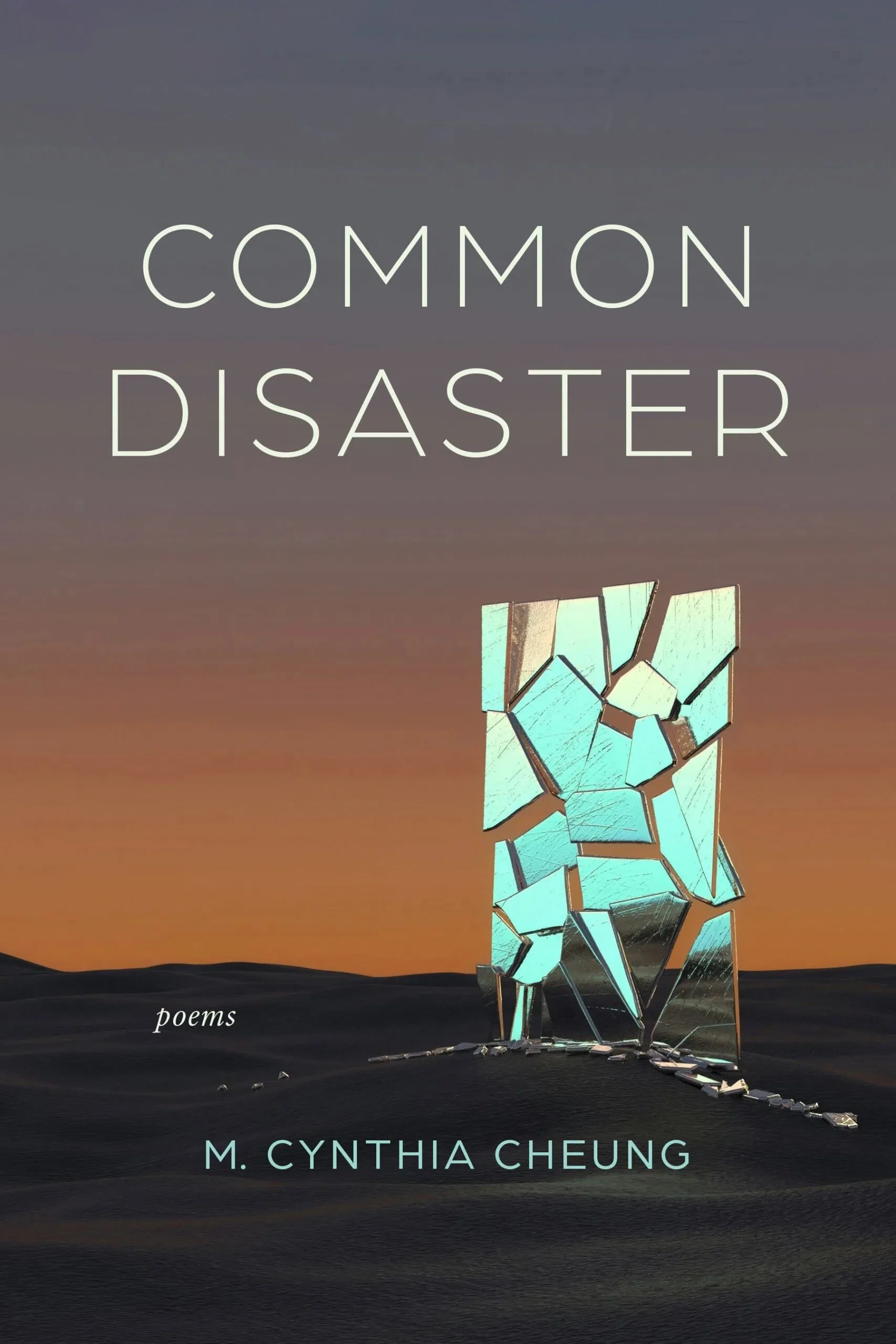
Common Disaster by M. Cynthia Cheung — Acre Books, 2025
Poetry / 80 pages / $17
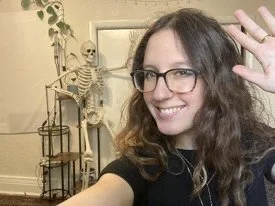
Katie Pelkey is a third-year MFA candidate in poetry and teacher at Syracuse University. She often writes about humanity's enduring preoccupations: sex and death.