Kevin B
Smoke Detectors
Pushcart Prize Nominee
Where I come from, you can’t put batteries in the smoke detectors. Mom smokes so much, it’s in the walls. It’s an everlasting presence in the air. There is no air. Not really. Just methanol and acrolein and hydrocarbons and other things that belong in cement and not in the lungs. On the kitchen table, there are playing cards. Mostly jokers. Nobody plays cards here. Nobody knows how to play cards, but everybody likes how they look splayed out next to overflowing ashtrays and tabloids stained with Diet Coke.
“Somebody give Boo Boo a piece of chicken,” my Mom will say, motioning to the small pony under the table. Word has it that Boo Boo is a dog and not a pony or a kangaroo, but Mom’s fed him so much people food that he’s a good forty pounds heavier than any dog should be. When his ears jut out, he could be a dingo. His temperament is that of a dachshund—entitled, but ultimately loveable. He slinks under the kitchen table and the whole thing flies up a few inches sending jokers everywhere. Mom just laughs. She can’t get mad at Boo Boo. He’s the only child she has that doesn’t meet with her vitriol at least once a week.
I bring over a pack of Marlboros every time I visit. A big pack. Not a regular one. The long kind with enough sticks to tar up a pothole. We’re all expected to do this. These are the offerings we carry with us if we wish to spend time in our childhood home. On Friday nights, we’re expected to bring the smokes and the jokes. Jokes from the jokers. The wild neighborhood kids who Mom took in. None of us knew our own biology until we were grown. Which ones were legally attached to Mom and which were just the recipients of her kind heart. For someone who thought nothing of taking in orphans and strays, she could cut you down with nothing more than a haiku if you proved lacking. “My disappointment. Still dumb enough to need me. And where are my smokes?”
Each of us had our own animal at one time or another. Like fantasy characters assigned wolves or talking birds, we each had a pile of mange and fleas that we were expected to nurse back to health. Once we had, the animal would disappear from whence it came. One of my sisters had to nurse a raccoon. My older brother had to rehabilitate a one-legged squirrel. I had a half-dead dog named Cliff. I spent the better part of fourth grade rejuvenating him. When I was done, Mom took him on as her own. She poached him from me. Handed me an abandoned kitten and told me if it died on my watch, I’d never see Heaven. I’m nearly forty years old and I still have no idea whether or not she was joking when she said it.
There’s a little TV perched on a small shelf above the stove that never gets a good signal. The TV is black and white, but every so often, a burst of color will break through the smoke. Usually it’s one of the feathers on the NBC peacock, but sometimes it’s just the blue of a Jeopardy square. Mom wins at Jeopardy every night. If she loses, it’s “Off with their heads.” The room has to be cleared out. People spill into the street. Word gets around the block. “I don’t know if you heard, but Mom lost at Jeopardy tonight. Better leave her alone.”
Mom has a walkie talkie attached to her right hand. Mumbled code and static come over the little blocks every few minutes, but Mom only responds when it’s the voice of a man she calls Terranova. When she hears him, her entire demeanor changes. She waves away as much of the smoke as she can before she answers him as though the haze might make its way into the little holes at the top part of the talkie and choke the poor guy while the rest of us slowly develop emphysema.
“That’s a giddy-up, Terranova,” Mom barks into the block, dialing up her Southern roots to sound a little more intoxicating. “Gotta come by and see me sometime, don’t you think?”
Mom stopped seeing men after her third husband died. My dad was her second husband, but I hear he was a real piece of work. Mom says we’re allowed to get three stories about any man she’s ever been with, but after the third story, you have to talk about something else. When I asked for three stories about my father, I got the following: she met him at Scoville Bowl ‘n Skate. He had a tattoo on his shoulder of James Dean. The night he left, there were seven separate fires set all over town. My father never seemed like an arsonist, but then again, what does an arsonist seem like?
“He did love to light my cigarettes,” Mom would say, coughing the same cough she’d had since before I was born. “He’d make me keep my Marlboro in the flame until I was scared the whole damn thing would go up in smoke.”
We hear stories about who Mom used to be. Short stories that are clipped with a message about working hard and then taking no credit for it. Mom talks about having every kind of job there is—from inventor to politician. She tells us she came up with the idea for Medicaid. A few minutes later she’ll talk about doing security on a cruise ship. Each story gets one evocative detail. The way the papercuts stung when she was coming up with the forms for Medicaid eligibility or the way the ocean smelled as she was doing her rounds. You let her talk, because you like the sound of her voice, and the way she laughs whenever she’d crack herself up. Half her stories sound like plots from old sitcom episodes.
“That’s when I was living in Miami with those four other ladies,” she’d say. “One of them was really dumb, and the other slept around a lot. I don’t judge people though. That’s one thing you should never do. You don’t judge people.”
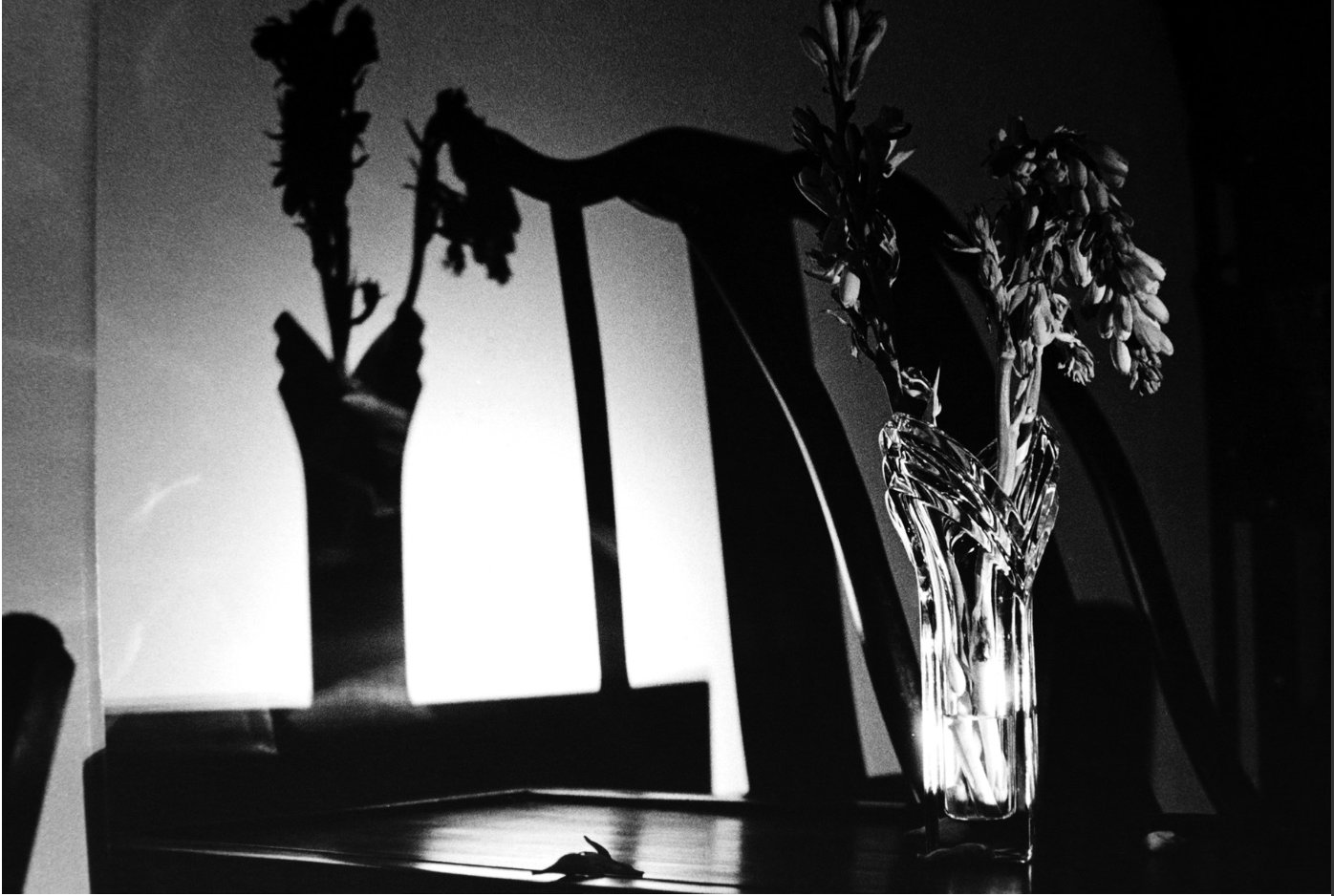
On the table, there is a long, clear vase with a single rose in it. I never saw anybody swap out that rose, but I also never saw it wilt. I always thought Mom needed a little beauty in her life amidst the linoleum and the grease stains on the stovetop. The fridge that hummed too loud. The mothball smell coming out of the bedroom. A toaster that only burned. A freezer where the ice cubes could never quite solidify. Mom’s kitchen was like her life—hanging on as best it could. Where I come from, everybody was doing that. Learning to love the broken bits. Telling ourselves that progress meant never calling a plumber. Adjusting to dysfunction showed your merit. Who needed ice cubes? Who needed smoke detectors? Who needed dog food?
“Boo Boo doesn’t like dog food,” Mom would shout whenever anybody suggested giving the alleged canine kibble, “He has good taste. That’s because I raised him right.” With that, she’d light up another cigarette—or somebody would do it for her. She’d let out an uninterrupted stream of vapor, and then tap on one of the jokers.
“Well,” she’d say, “We gonna play or what?”
Kevin B is a writer and poet from New England. Their work has been published in Lemonwood Quarterly, Mania, storySouth, Folly, and Apotheca. Their story “Uncle Grendel” won the George Lila Award. They are the recipient of the Rose Warner Prize for Fiction.
This piece was originally published in Salt Hill 54.